Showing posts with label Auschwitz. Show all posts

Wednesday, September 23, 2015

Boulloche Siblings

The Last Train Out of Paris
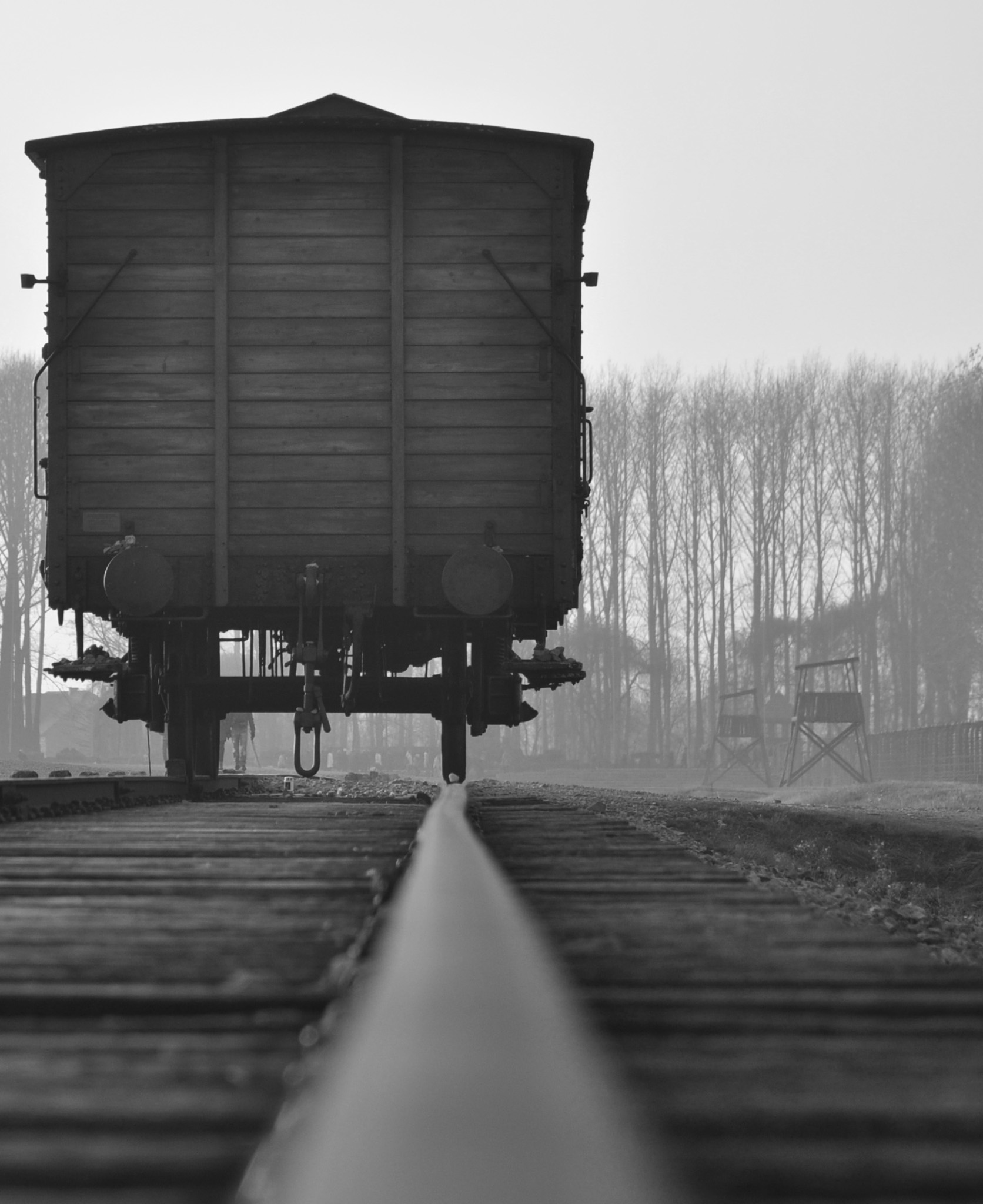

Auschwitz train. Photo by MaximilienM (2011)
At 3:00 AM on Sunday, 6 August 1944, Gestapo agents burst into the third floor apartment in Paris belonging to Jacques and Hélène Boulloche (28, avenue d’Eylau). They were looking to arrest Christiane Boulloche, Jacques and Hélène’s 20 year-old daughter. The Boulloche sisters, Christiane and Jacqueline, and their brother, André, had joined the fledgling resistance movement in Paris at the outset of the Nazi occupation beginning in June 1940.
What made these 3 Résistants different than most? Well, first of all, they survived (André was one of the few who returned from the extermination camps—three including Auschwitz). The life expectancy of a resistance member in Paris (especially after Hitler invaded the Soviet Union and the resistance movement became more active) was about 4-weeks. The second major difference was that they joined early on without having any political agenda. They joined because it was the right thing to do. Many of the Résistants during the subsequent years of occupation were communists and their leaders had political agendas. Towards the end when it became clear the Allies would liberate France and Paris, many people “joined” the resistance movement.
Jacques, Hélène, and the oldest son, Robert, did not join the resistance. Jacques and Robert were mid-level government bureaucrats who felt it was their duty to keep the country running (albeit under the Vichy regime). While they knew their 3 youngest children were involved, the parents knew nothing of their resistance activities. After the Allies successfully invaded Northern Africa in November 1942, the Germans took over France and eliminated the unoccupied zone. They also stepped up their brutality towards the citizens of Paris and France. They would now arrest, torture, and deport the immediate family members of a known or suspected Résistant.
Over the next week, visitors to the Boulloche apartment were detained and interrogated by the Gestapo and the French paramilitary police known as the Milice. During this time, the imprisoned Boulloches were tortured by the Gestapo (Hélène was water boarded) and when the Nazis finally determined these 3 people had no idea where Christiane was hiding, they were stuffed into a cattle car at the Pantin Station. Among the French prisoners on the train were André Boulloche’s friend and former school mate, André Rondenay, and another Résistant, Alain de Beaufort.
The train convoy left Paris on 15 August 1944 (ten days before the liberation of Paris). Less than an hour outside Paris, the train stopped and Rondenay and de Beaufort were taken off and loaded into a car. They were taken into the forest and executed by a Gestapo firing squad. The train was the last one leaving Paris that would arrive in Germany. It was also one of the few that did not carry Jews—only political prisoners (the Boulloche family were Catholic).
The men were taken to Buchenwald while the women went to Ravensbrück. Hélène died on 25 October 1944. After his wife’s letters stopped, Jacques died at Buchenwald on 18 February 1945, while Robert had succumbed on 20 January 1945 at a sub-camp of Dora-Mittelbau.
A black granite tomb inscribed Famille A. Boulloche is located at Pére Lachaise Cemetery in Paris. The names of the 3 family members, Jacques, Hélène, and Robert, are chiseled on the top. The grave is empty.
The full story of the Boulloche family during the occupation of Paris is told by Charles Kaiser in his book, The Cost of Courage. It’s a remarkable story that I urge you to read.
Found at www.stewross.com/the-last-train-out-of-paris.

Tuesday, September 22, 2015

CONVOI DES 31000

In January 1942, French policemen began a special mission, in collaboration with Nazi officials, to seize those in the Resistance. 230 women were captured and sent to a German prison.

Apart from being women resisters, few had collaborated together before being captured and had little in common. Some were from rural France, others from big cities; their professions ranged from doctor and midwife, to secretary, hairdresser and teacher; their ages ran between 17 and 67; some were single, others were grandparents; and though nearly half of them communists, others were not. 

On 24 January 1943, the women were loaded into a cattle car transport called “Convoi des 31000” and transferred to Auschwitz. They were the only group of non-Jewish women sent to death camps during the Nazi occupation. Despite being treated better than the camp’s Jewish population, only 80 of the 230 women were still alive within 10 weeks of their arrival — some died from typhus, starvation and dysentery. Others by gassing, gunshot or as victims of "the race" of 10 February 1943.

Of the 230 women, only 49 survived. In her book A Train in Winter, Caroline Moorehead emphasized that friendship helped them get through the hardships they endured. Separated from home and loved ones, their common experience conquered divisions of age, education, profession and class as they found solace and strength in their deep affection and camaraderie.

Detailed biographies may be found for these women by clicking HERE. The link will take you to a page where they are listed by last name. It is in French:

31779 Jeanne "Muguette" Borderie-Alexandre (1912-1943)
31777 Marie "Mariette" Alizon (1921-1943)
31776 Simone “Poupette” Alizon (1925-) *
31807 Helene Bolleau-Allaire (1924-) *
31778 Maria "Josee" Alonso (1910-1943)
31775 Helene Demangeat-Antoine (1898-1943)
31792 Yvonne T.-B. (1917-1943) =
31651 Marie-Jeanne Gantou-Bauer (1913-1984) *
31842 Germaine Pirou-Berger (1918-) *
31837 Eugenia "Jeanne-the-Russian" Beskine (1889-1943) =
31763 Antoinette Tressard-Besseyre (1919-) *
31771 Antoinette Meterreau-Bibault (1893-1943)
31734 Felicienne Pintos-Bierge (1914-1996) *
31652 Rosette Amelie Louise Blanc (1919-1943)
31737 Claudine Pinet-Blateau (1911-1981) *
31653 Yvonne Vauder-Blech (1907-1943)
31806 Emma Laumondais-Bolleau (1901-1943)
31848 Josee Bonenfant (-1943)
31... Yvonne Bonnard (1899-1943)
31650 Christiane "Cecile" Charua-Borras (1915-) *
31815 Leona Clemence Raveau-Boullard (1885-1943)
31... Alice Paris-Boulet (1914-1943)
31792 Yvonne Toublanc-Boutgourg (1908-)
31694 Sophie Czeposka-Brabander (1923-1943) =
31695 Helene Brabander (-1943)
31747 Georgette Fourcade-Bret (1905-1943)
31705 Simone Victorine Pichon-Brugal (1897-1943)
31808 Marcelle Bureau (1923-1943)
31738 Alice Gardelle-Cailbrault (1907-1943)
31740 Germaine Charles-Cantelaube (1908-1943)
31760 Yvonne Calmels-Carre (1897-1943)
31655 Vincentella "Danielle" Perini-Casanova (1909-1943) +
31719 Helene Vervin-Castera (1887-1943)
31691 Yvonne Richard-Cave (1896-1943)
31656 Camille Chaut-Champion (1898-1943)
31824 Marie-Mathilde Sapin-Chaux(1876-1943)
31796 Marguerite-Germaine Boucher-Chavaroc (1894-1943)
31687 Marie-Elisa Nordmann-Cohen (1910-1993) *
31853 Marie-Louise "Marilou" Mechain-Columbain (1920-1998) *
31657 Marguerite Helleringer-Corringer (1902-1999) *
31830 Renee Raquet-Cossin (1914-1943)
31765 Suzanne Boineau-Costentin (1893-1943)
31804 Sylviane Coupet (1925-1943)
31799 Yvonne-Marie Maguer-Courillat (1911-1943)
31772 Jeanne Couteau (1901-1943)
31685 Marie-Claude Vogel-Vaillant Couturier (1912-1996) * +
31690 Madeleine Demiot-Damous (1913-1943)
31625 Vittoria "Viva" Nenni-Daubeuf (1915-1943)
31658 Simone Noyer-David (1921-1943)
31639 Madeleine Dechavassine (1900-) *
31756 Charlotte Dauriat-Decock (1901-1945)
31659 Alida Charbonnier-Delasalle (1907-) *
31773 Rachel Deniau (1899-1943)
31767 Aimee Godefroy-Doridat (1905- / sister-in-law to Olga Godefroy) *
31762 Charlotte Merlin-Douillot (1900-1943 / mother to Rolande Vandaele)
31808 Germaine Legarde-Drapron (1903-) *
31693 Marie Corot-Dubois (1890-1943)
31746 Aurelle "Marie-Louise" Dudon-Ducros (1903-1943)
31661 Charlotte Delbo-Dudach (1913-1985) * +
31731 Elisabeth "Babet" Dufour-Dupeyron (1914-1943)
31703 Marie-Jeanne "Lili" Dupont (1921-) *
31751 Charlotte Clemence Henriette "Mauricette" Dupuis (1894-1943)
31727 Noemie Lesterp-Durand (1890-1943 / sister to Rachel Fernandez) =
31764 Simone Eiffes (1920-1943)
31662 Yvonne Lachaume-Emorine (1912-1942)
31724 Anne-Marie "Annette" Manchefaud-Epaud (1900-1943)
31625 Gabrielle Papillon-Ethis (1896-1943 / aunt to Henriette Pizzoli)
31723 Rachel Lesterp-Fernandez (1895-1943 / sister to Noemie Durand)
31816 Marie-Marcelle "Mitzy" Ferry (1918-1988) *
31663 Yvette Feuillet (1920-1943)
31839 Marie-Therese Naudin-Fleury (1907-1943)
31854 Rose-Michelle "Rosie" Floch (1925-1943)
31789 Emilie Angeline "Line" Porcher-Fourmy (1880-1943)
31793 Helene Pellault-Fournier (1904-1994) *
31826 Marcelle Fuglesang (1903-1943)
31... Marie Thomas-Gabb (1891-1943)
31642 Madeleine Van Hyfte-Galesloot (1908-1943)
31849 Yvonne-Renee Lucie Gallois (1921-1943)
31811 Suzanne Leblond-Gascard (1901-1943)
31833 Laure Gatet (1913-1943)
31750 Raymonde Le Margueresse-Georges (1917-1943)
31844 Sophie Richet-Gigand (1897-1943 / mother to Andree Gigand) =
31845 Andree Gigand (1921-1943 / daughter to Sophie Gigand)
31743 Yolande Pica-Gili (1922- /sister to Aurore Pica) *
31632 Angele-Marcelle "Renee" Girard (1894-1943)
31706 Germaine-Emma Girard (1904-1943)
31766 Olga Camus-Godefroy (1906-1943 / sister-in-law to Aimee Doridat)
31753 Marcelle "Paulette" Gourmelon (1924-1943)
31780 Franciska "Cica" Goutayer (1900-1943)
31770 Jeanne-Claire Bergoend-Grandperret (1896-1943)
31664 Claudine Guerin (1925-1943)
31729 Aminthe Auger-Guillon (1884-1943 / mother-in-law to Yvette Guillon) =
31730 Yvette Sardet-Guillon (1911-1943 / daughter-in-law to Aminthe Guillon) =
31631 Jeanne Guivarch-Guyot (1913-1945)
31636 Adrianne "Linotte" Coston-Hardenberg (1906-1943)
31755 Helene Hascoet (1910-1943)
31802 Adelaide "Heidi"  Hautval (1906-1988) * +
31832 Marthe "Violette" Guay-Hebrard (1911-1943)
31781 Lucette Suzanne Magui-Herbassier (1914-1943)
31... Jeanne "Janine" Herschtel (1911-1943)
31768 Jeanne Herve (1901-1943)
31699 Henriette Schmidt-Carr/Heussler (1912-1943)
31630 Marguerite-Josephine Hudelaine-Houdart (1904-1943)
31688 Henriette Merlin-L'Huillier (-1943)
31813 Jeanne Larcher-Humbert (1915-1943)
31827 Anna Karpen-Jacquat (1894-1943)
31782 Germaine Mouze-Jaunay (1898-1943)
31665 Marie-Louise Bonnat-Jourdan (1899-1943)
31759 Suzanne-Renee Juhem (1912-1943)
31698 Irina Byczeck-Karchewska (1899-1943)
31783 Emilia "Lea" Baliteau-Kerisit (1895-1943)
31707 Karolina Konefal (1920-1943)
31700 Eugenie Korzeniowska (1901-1943) =
31814 Marguerite Urgon-Kotlerewsky (1903-1943)
31795 Lina Kuhn or Kuhne (1908-1943)
31717 Georgette Reau-Lacabanne (1910-1943)
31666 Madeleine "Michele" Guitton-Laffitte (1914-1943)
31667 Gisele Lung-Laguesse (1915-1943)
31821 Lea Durbecq-Lambert (1892-1943)
31800 Therese Gady-Lamboy (1918-) *
31784 Fabienne Landy (1921-1943)
31668 Lucienne Langlois (1914-1943)
31721 Berthe Lescure-Lapeyrade (1895-1943) =
31... Suzanne Lasne (1924-1943)
31748 Fernande Lieval-Laurent (1902-1965)*
31785 Marcelle Mardelle-Laurillou (1914-1943)
31726 Lucienne "Nicole" Michaud-Lautissier (1923-) *
31669 Louise "Nayette" Amand-Lavigne (1904-1943)
31692 Luciennt Lebreton (1905-1943)
31841 Angele "Daniele" Denonne-Leduc (1891-1943)
31670 Marcelle Beziau-Lemasson (1909-) *
31786 Elisabeth-Marcelle Le Porte (1919-1943)
31835 Marguerite Joubert-Lermite (1910-1943)
31671 Marie Lesage (1898-1943)
31733 Charlotte Zanker-Lescure (1902-1943)
31803 Sophie Schaud-Licht (1905-1943)
31704 Yvonne Rose Llucia (1910-1943)
31672 Simone Fougere-Loche (1913-1943)*
31829 Alice Loeb (1891-1943)
31828 Louise Le Du-Loquet (1901-1943)
31835 Yvonne Loriou (1905-1943)
31757 Louise Marie-Losserand (1904-) *
31637 Jeannette “Carmen” Serre-Louis (1919-)*
31673 Louise Magadur (1899-)*
31... Suzanne Potet-Maillard (1894-1943)
31648 Lucienne Caccia-Mansuy (1915-2007) *
31787 Yvette Champion-Marival (1915-1943)
31696 Luz-Higinia Goni-Martos (1906-1943)
31788 Germaine Maurice (1918-1943)
31674 Henriette Caillor-Mauvais (1906-) *
31708 Olga Meru-Melin (1913-1945)
31851 Angele Mercier (1919-1943)
31818 Georgette "Jo" Lyet-Mesmer (1913-1943)
31... Suzanne Meugnot (1896-1943)
31675 Marthe Brillouet-Meynard (1912-1973) *
31676 Renee "Marcelle" Michaux (1920-1943)
31709 Simone Blanche Julie Brunet-Miternique (1906-1943) =
31677 Gisele Mollet (1920-1943)
31686 Suzanne Momon (1896-1943)
31820 Denise Cacaly-Moret (1919-1944)
31710 Marie-Louise Cribier-Morin (1888-1943 / mother to Madeleine Morin)
31... Madeleine Morin (1922-1943) / daughter to Marie-Louise Morin)
31825 Marie-Louise "Lisette" Moru (1925-1943)
31819 Marcelle Parate-Mourot (1918-) *
31702 Anna Nizinska (1917-1943)
31678 Madeleine Plantevigne-Normand (1897-1943)
31718 Yvonne Moudoulaud-Noutari (Yvette De Bordeaux / 1915-1944)
31660 Madeleine Dissoubray-Odru (1917-2012)*
31797 Toussainte "Nine" Oppici (1905-1943)
31801 Anne-Marie Borsch-Ostrowska (1900-1943)
31689 Lucienne Palluy (1910-1943)
31684 Helene Langevin-Solomon (1909-1995) * +
31728 Yvonne Pateau-Lateau (1901-1943)
31794 Eugenie Pakula-Pauquet (1922-) *
31633 Lucie "Lucette" Pecheux (1905-1943)
31817 Marie-Jeanne Pennec (1909-) *
31644 Madeleine Doiret-Perriot (1920-2001)*
31742 Aurore Pica (1924-1943 / sister to Yolande Gill)
31679 Germaine Morigot-Pican (1901-) *
31634 Yvonne Picard (1921-1943)
31812 Suzanne Buffard-Pierre (1912-1943)
31629 Renee "Bichette"Legros-Pitiot (1921-) *
31626 Henriette Papillon-Pizzoli (1920-1943 / niece to Gabrielle Ethis)
31769 Juliette Meme-Poirier (1918-1943)
31680 Marie "Mai" Fourcade-Politzer (1905-1943) +
31... Pauline Lafabrier-Pomies (1877-1943) =
31638 Delphine Jallat-Presset (1900-1943)
31722 Lucienne Ferre-Proux (1922-1943)
31654 Paulette "Pepee" Parant-Prunieres (1918-) *
31720 Marie-Therese Souriel-Puyoou (1897-1943)
31641 Jacqueline Quatremaire (1918-1943)
31725 Paula Trapy-Rabeaux (1911-1943)
31754 Constance Rappenau (1879-1943) =
31682 Germaine Renaud (1908-1943)
31716 Germaine Perraux-Renaudin (1906-1968) *
31840? Marguerite Cardinet-Richier (1881-1943 / mother to Armande & Odette Richier)
31846? Armande Richier (1916-1942 / daughter to Marguerite Richier)
31847? Odette Richier (1911-1943 / daughter to Marguerite Richier)
31741 Anne Riffaud-Richon (1898-1943)
31798 Gabrielle Bergin-Richoux (1894-1943)
31... Francine Rondeaux (1901-1943)
31850 Georgette Rostaing (1911-1943)
31701 Felicia "Lucia" Rostkowska (1908-1943)
31646 Denise Roucayrol (1901-1943)
31681 Suzanne Clement-Roze (1904-1943)
31838 Esterina Ruju (1885-1943)
31745 Leonie Daubigny-Sabail (1891-1943)
31713 Anna Gries-Sabot (1898-1943)
31683 Berthe-Celina Fays-Sabourault (1904-1943)
31645 Raymonde "Mounette" Salez (1919-1943)
31758 Simone Sampaix (1924-) *
31647 Alphonsine Guiard-Seibert (1899-1945)
31752 Leonie Seignolle (1901-)
31790 Raymonde Delalande-Sergent (1903-1943)
31823 Julia Slusarczyk (1902-) *
31791 Yvonne Houdayer-Souchaud (1897-1943)
31739 Jeanne Renon-Souque (1894-1943)
31805 Marguerite Battais-Stora (1895-1943)
31714 Andree Tamise (1922-1943)
31715 Gilberte Tamise (1912-2009) *
31642 Lucienne "Lulu" Serre-Thevenin (1917-2009) *
31640 Jeanne Thiebault (1909-1942)
31848 Josephine "Mado" Bizarri-Umido (1903-1943)
31732 Marguerite "Margot" Maurin-Valina (1906-1943)
31761 Rolande Douillot-Vandaele (1918- / daughter to Charlotte Douillot)*
31749 Theodora Disper-Van Dam (1882-1943 / mother to Reyna van Dam) =
31831 Reyna van Dam (1924-1943 /daughter to Theodora van Dam)
31697 Jakoba Van Der Lee (1891-1943) =
31810 Alice Varailhon (1897-1943)
31822 Alice Lumbroso-Viterbo (1895-1943) =
31744 Madeleine Davy-Zani (1915-1943)

=Victim of "The Race"
*Survived Auschwitz
+See Blog Post

CONCENTRATION CAMP BADGES & NUMBERS

The top row of triangles on this chart shows all the colors of the badges worn by the prisoners in Nazi concentration camps.
  • Red was for Communists, Social Democrats, anarchists and other "enemies of the state". 
  • Green was for German criminals who had committed two or more crimes.
  • Blue was for foreign forced laborers. 
  • Brown was for the Sinti and Gypsies (Roma).
  • Pink was for homosexuals. 
  • Purple was for Jehovah's Witnesses (Bibelforscher).
  • Black was for asocials, a catch-all term for vagrants, bums, prostitutes, hobos, perverts, alcoholics who were living on the streets, or anyone who didn't have a permanent address. The "work-shy," or those who were arrested because they refused to work, wore a black badge.
Prior to 1942, Gypsy men wore a black triangle. They were arrested and imprisoned for being asocial ... meaning they didn't have a permanent address ... or for being "work-shy" because they were not employed. Every male citizen in Nazi Germany, who was capable of working, was required to take a job and they were not allowed to quit their job without permission. Gypsy women were arrested under the asocial category if they were prostitutes. In 1942, Gypsy families were rounded up and sent to Auschwitz where they were kept separately in a "family camp." After the Gypsy camp was closed, some of the prisoners were sent to Buchenwald. Others were murdered in the gas chamber.

The second row shows the same colors with a matching bar over the triangle. The bar designated a "second-timer", or a prisoner who had been released and was then arrested again for a second offense. These prisoners were isolated from the general camp population and were not allowed privileges. Their work assignments were much more difficult. Many of the prisoners, including some Jews in the early days at Dachau, were released after they had been "rehabilitated."

The black circles under the badges in the third row designate prisoners who were assigned to the penal colony. They were given the most difficult work assignments, usually in a rock quarry or gravel pit. Many of the camp locations were chosen because they were near a quarry which could furnish building materials for the new buildings Hitler was planning for Berlin and Linz, Austria, his former home town. Dachau had a gravel pit which was located where the Carmelite convent now stands.

The fourth row shows yellow triangles with each of the regular triangle colors placed on the top, forming a six-pointed star. These badges were worn by Jews and showed their classification as political prisoners, criminals, foreign forced laborers, homosexuals or asocials:

Jewish political prisoners wore a yellow triangle with a red triangle on top. Jews who wore a white triangle over a yellow one were called Jüdisher Rassenschänder. A black triangle designated an a-social (Asozialer). A Jewish a-social was a Jüdisher Asozialer who wore a black triangle over a yellow one. A green triangle meant a criminal who was a repeat offender; Jewish criminals wore a green triangle over a yellow one and were called Jüdisher Befristeter Vorbeugeshäftlinge or Jewish prisoners in limited preventive custody.

A red triangle pointing downward designated a non-Jewish political prisoner. A letter within the triangle indicated the prisoner's origin ... Poland or France for example. If the red triangle was pointing upward, it designated a German political prisoner.

No Jews were sent to a concentration camp just for being Jewish until November 1938 when 30,000 German Jews were arrested and approximately 10,000 were sent to each of the major camps: Dachau, Buchenwald and Sachsenhausen. Most of them were released within a few weeks, but only if they agreed to leave Germany within six months. Many of them ended up going to Shanghai because they could not get visas to any country and, during the war, they were interned by the Japanese.

Beginning in February 1942, all of the Jews in Germany and the Nazi occupied countries were systematically rounded up and sent to the death camps in what is now Poland.

The fifth row shows a yellow triangle with another yellow triangle (bordered in black) on top of it. This badge designated a Jew who was arrested for race defilement, which meant having sex with a non-Jew in violation of the Nuremberg Laws of 1935.

All prisoners at the Nazi concentration camps were assigned an identification number and at roll call, they had to answer when their number was called. The number was written on a white rectangle which each prisoner had to wear on his uniform.

A prison uniform is shown on the chart above with the placement of the badge on either the shirt or the pants. Prisoners were not required to wear a striped uniform. Photographs displayed in the Dachau museum, taken in 1938, show most of the prisoners wearing a regular shirt and striped pants with their prison number worn on their pant's leg.

Armbands


Armbands were used within the camps to identify kapos, camp "police" (detainees assigned to keep order among their fellow detainees), and certain work crew leaders. Armbands were also in use among detainees sent to perform forced labor in factories outside the camps.

Identification Numbers

The common belief is that all concentration camps tattooed identification numbers on prisoners ... not true. The Auschwitz concentration camp (including Auschwiz I, Auschwitz/Birgenau and Monowitz) was the only location in which prisoners were systematically tattooed. The misconception came about because Auschwitz inmates were often sent to other camps. 

As thousands of Soviet POWs arrived at Auschwitz in the autumn of 1941, camp authorities began to tattoo prisoners for identification purposes. In the spring of 1943, the authorities adopted the practice of tattooing almost all previously registered and newly arrived prisoners, including female prisoners. Exceptions to this practice were prisoners of German nationality and “reeducation prisoners,” who were held in a separate compound. “Reeducation prisoners,” or “labor-education prisoners,” were non-Jewish persons of virtually all European nationalities (but at Auschwitz primarily Germans, Czechs, Poles and Soviet civilians) who had run afoul of the harsh labor discipline imposed on civilian laborers in areas under German control.

Originally, a special metal stamp, holding interchangeable numbers made up of needles approx. one centimeter long was used. The number was punched onto the prisoner's upper chest and rubbed with ink. When metal stamps became impractical, a single-needle device was introduced, which pierced the outlines of the identification number onto the skin.

Note: The women of Convoi des 31000 were sent to Auschwitz.

Monday, September 21, 2015

Charlotte Delbo-Dudach (1913-1985)

Charlotte Delbo was born in Vigneux-sur-Seine, Essone on 10 August 1913. In 1934 she married George Dudach and later went to work for actor and threatical producer Louis Jouvet. She was with his company in Buenos Aires when the Germans occupied France in 1940.

In 1941 Philippe Petain, leader of the collaborationist Vichy regime, established special courts in 1941 to deal with members of the resistance. Among those put to death was a young architect friend. "I can't stand being safe while others are guillotined", she told Jouvet. "I won't be able to look anyone in the eye."

She returned to Paris where her husband was already active in the Resistance as the assigned courier for the internationally famous poet Louis Aragon. The couple spent much of that winter printing and distributing pamphlets and other anti-Nazi Germany reading material. They became part of the group around communist philosopher Georges Politzer, and took an active role in publishing the underground journal Lettres Françaises.

On 2 March 1942 police followed a careless courier to their apartment, and arrested them. The courier was able to escape from a back window. George was shot the morning of 23 May after being allowed to bid his wife farewell.

Charlotte was held in transit camps near Paris for the rest of the year. Then on 23 January 1943 she and 229 other Frenchwomen, imprisoned for their resistance activities, were put on a train for the Auschwitz concentration camp. She wrote about this experience later in Le convoi du 24 janvier (published in English as Convoy to Auschwitz). The convoy entered camp legend as the only one to enter the gates singing La Marseillaise. It was partly thanks to the presence of several scientists among the prisoners that a few, Delbo included, were selected to farm kok-saghyz at the Raisko satellite camp and survived. In 1945, as the war drew to a close, they were released to the custody of the Swedish chapter of the International Red Cross. After recuperating, Charlotte returned to France.

She wrote her major work, the trilogy published as Auschwitz and After (None of Us Will Return, Useless Knowledge and The Measure of Our Days) in the years immediately after the war. To give the book the test of time, and because of her fear it would not do justice to the greatest tragedy humanity had known, she held off on publishing the first part until 1965. The final volumes were published in 1970 and 1971. The play Qui Rapportera Ces Paroles? (Who Will Carry the Word?) is about her experience at Birkenau.

In later years she abandoned Communism, influenced like other resister-survivors by the exposure of concentration camps in the Soviet Union. During the 1960s she worked for the United Nations and philosopher Henri Lefebvre, who had worked with Politzer before the war. She died of lung cancer in 1985.

Friday, September 18, 2015

Rose Gluck-Warfman (1916-)

Top Left: Rose Warfman
Rose Gluck, daughter of Pinhas (Paul) Gluck-Friedman and Henia Shipper, was born in Zurich, Switzerland on 4 October 1916. Her father was a direct descendant ot Hasidic Masters, going back to the Magid Dov Ber of Mezeritch, the disiple and successor of the Baal Shem Tov.

Her parents had moved from Tarnow, Poland, to Belgium and then to Switzerland during WWI. They moved to Germany and finally to France in 1921, settling in Strasbourg. After moving to Paris, she studied to be a nurse. Before the start of WWII, she worked at the COJASOR, a Jewish social service organization.

During WWII she joined her sister and brother-in-law, Antoinette and Rabbi David Feuerwerker in Brive-la-Gaillarde. Together, they worked with Edmond Michelet (future Senior Minister of Charles de Gaulle) in Combat, a major movement of the French Resistance. Her name in the Resistance was Marie Rose Girardin.

Rose was arrested in the Synagogue of Brive in March 1944. She was taken to Drancy internment camp where her sister was able to send her a nurse uniform. She was wearing that uniform on 29 April 1944 when she was put on Convoy 72 to Auschwitz where the number 80598 was tattooed on her arm. Underneath there is a triangle, meaning she is a Jew. Serge Klarsfeld described the convoy:

"This convoy takes 1004 Jews, and includes 398 men and 606 women. Among them were 174 children below 18. The poet Itzak Katznelson (Itzhak Katzenelson) is among the deportees of this convoy, as well as many Poles, arrested as he was in Vittel, after having been transferred from Poland. There are families: the children Dodelzak, Ita 12, Georges 3 and Arkadius 3 months; the Rottenberg, Naphtalie 7, Nathan 5, Esther 4, Frantz 2,... On arrival at Auschwitz, 48 men were selectioned with the numbers 186596 to 186643 and 52 women, whose numbers are around 80600. In 1945, there were 37 survivors, including 25 women."

The infamous Dr. Josef Mengele, singled her for survival and later operated on her without anesthesia. She survived three selections in Auschwitz, and was later transferred to the Gross-Rosen concentration camp which she found was worse than Auschwitz. There she worked 12-hour shifts on an assembly line in a munnitions factory.

Even in concentration camp, she did passive resistance. In Birkenau, she was assigned to a group of 50 women who were knitting. A kapo made them knit undershirts for German newborns. She worked hard, and was given as a role model. Then winter came, they were asked to knit socks for men (Germans). Her vengeance was to make big knots inside to render them unusable.

Her camp was liberated by the Russian Army in June 1945. After the War, she returned to Paris where she became the one and sole employee of the new Israeli Airlines, El Al. She was involved in the adventure of the Exodus (ship) (Exodus1947). Together with Abbé Alexandre Glasberg, she made the false identity cards for the passengers.

Rose married Nachman Warfman, with whom she had three children: Bernard, Salomon David, and Anne. She moved to Manchester, England, to be close to her children, her grandchildren and her great grandchildren.

Thursday, September 17, 2015

Adelaide Hautval (1906-1988)

Adelaide Hautval was born to a Protestant family in Hohwald (Bas Rhin), France in 1906. She studied medicine in Strasbourg, going on to work in several psychiatric wards.

In April 1942, she was told of the death of her mother who lived in occupied Paris. Wishing to attend her mother's burial, Adelaide asked German authorities for permission to cross the demarcation line separating the two zones of France and was refused. Her attempt to make a crossing without the permit failed: Adelaide was arrested by the German police and transferred to the prison in Bourges.

That June, Jewish prisoners wearing the yellow patch began to arrive at the prison. As she awaited her, she protested the harsh treatment of Jewish prisoners who were incarcerated with her. The reply was that from now on she would share their fate. Undeterred, Adelaide pinned a piece of yellow paper to her clothing that read, "Friend of the Jews."

After incarceration in several detention camps, she was sent with 200 other French women to Auschwitz in January 1943 on a train that became known as the Convoi des 31000. She was housed with 500 Jewish women who nicknamed her "the saint."

She applied her medical knowledge to treat Jewish prisoners who had contracted typhus, secluding them in a separate part of the block, in order to prevent contagion. Employed as a physician by the camp commander, she refrained from reporting the prisoners’ illness and thereby spared them immediate death. She treated Jewish patients with boundless dedication, and her gentle hands and warm words were of inestimable value to Jews in the hell of Auschwitz. “Here,” she said, in words engraved on the prisoners’ memory, “we are all under sentence of death. Let us behave like human beings as long as we are alive.”

Adelaide was assigned to Dr. Eduard Wirths who conducted sterilization experiments on Jewish women in the infamous Block 10 at Auschwitz. She quickly discovered that the experiments were performed without anesthesia. When forced to assist in the surgical sterilization of a young woman from Greece, Dr. Hautval told Dr. Wirth that she would never again attend such a procedure. When Wirth asked Dr. Hautval: “Don’t you see that these people are different from you?” she replied, “In this camp, many people are different from me. You, for example.” 

After her confrontation with Dr. Wirths, she was advised to stay out of sight. She feared retribution but was not punished. In August 1944 she was moved to Ravensbruck where she continued to practice medicine and heal prisoners as much as possible until the camp liberated in April 1945. When she returned to France, her health had been permanently impaired.

Sunday, September 13, 2015

Helene Langevin-Solomon (1909-1995)

Helene Langevin was the daughter of the great scholar Paul Langevin and wife of writer Jacques Solomon, who she married in 1929.

On 2 March 1942, Jacques was arrested in a Paris cafe where he was having a working meeting for L'Universite'. He was interned at the police station until March 20, then at Cherche-Midi prison until May 11 and finally at La Sante Prison. He was handed over to the Germans and shot as a hostage on May 23 at Fort Mont-Valerien.

Helene was arrested on 10 March 1942 and eventually put on the Convoi des 31000 for Auschwicz. She was later transferred to Ravensbruck.

Saturday, September 12, 2015

Laure Mutschler-Diebold / Diebolt (1915-1965)

Laure Mutschler, the daughter of a French patriot family, was born in Erstein, Alsace-Lorraine, Germany on 10 January 1915. She spent her childhood in Sainte-Marie-aux-Mines where her parents lived from the year 1922. At the end of her studies, she became an administrative assistant in the Etablissements Baumgartner.

In 1940, Laure joined the "A.V." (Army of the Volunteers) resistance network of Dr. Bareiss in annexed Alsace and became a special agent under the name "Mado". Her assignment was to hide escaped war prisoners at her home in Alsace before helping them to escape to France.

Just before Christmas 1941, she was hidden in a locomotive and secretly brought to the free south of France. There she worked as an administrative assistant in the service which works with refugees from Alsace and from 1942 she collected information for the Resistance network "Mithidate" before encoding them and sending them to London by post mail.

On January 31, 1942, Laure married Eugène Diebold, who also escaped to Lyon. In July of that year they were arrested and later released by the Gestapo. They moved to Aix-les-Bains where Laure became known only as "Mona".

In September 1942 Laure was promoted to the rank of Lieutenant of the Free French Forces. She was assigned to the position of private secretary of Jean Moulin. After his arrest in 1943, she was sent to Paris to be the secretary of Georges Bidault.

She was arrested again on 23 November 1943 with her husband and sent to Fresnes Prison. She was not tortured because she convinced her Nazi captors that she was just a secretary and not a major figure in the Resistance network. Nevertheless, she was sent to the Schirmeck Nazi camp. Between January 1944 and her liberation in April 1945 she was transferred to AuschwitzRavensbrück and Buchenwald.

Laure died in Lyon on 17 October 1965 in Lyon and, in accordance with her last wishes, was buried in her childhood place Sainte-Marie-aux-Mines in Alsace. 

Wednesday, September 9, 2015

Danielle Perini-Casanova (1909-1943)

Vincentelli Perini (aka Danielle Casanova) was born  on 9 January 1909. She trained at the Paris Dental School where she discovered the Federal Union of Students. There she met her future husband, Laurent Casanova.

She joined the Communist Youth in 1928 and soon began to call herself "Danielle". In June 1932 she joined the Central Committee of the movement at the Seventh Congress of June 1932, and took up its direction in February 1934 where she was the only woman.

After the French Communist Youth was banned in September 1939, Danielle went into hiding. She wrote for the newspaper Le Trait de l'Union. From October 1940, after the fall of France, she helped set up women's committees in the Paris region, while still writing for the underground press, especially Pensée Libre (Free Thought). She also founded la Voix des Femmes (Women's Voice).

Danielle organized demonstrations against the occupying forces, notably the events of 8 & 11 November 1940 - the result of Professor Paul Langevin's arrest. On 2 August 1941 she met Albert Ouzoulias in Montparnasse and placed him in charge of the Bataillons de la Jeunesse, fighting groups that were being created by the Jeunesses Communistes.

The French Police arrested Danielle on 15 February 1942 while she was aiding Georges Politzer and his wife. On 24 January 1943 she was put on the Convoi des 31000 and transported to Auschwitz, where she was put to work as a dentist in the camp's infirmary. She helped other women from the Convoi by introducing them as doctors and nurses. To her death in Auschwitz on 9 May 1943, Danielle continued campaigning and organizing clandestine publications and events.

Monday, September 7, 2015

Zenaida Paley-Morhange (1909-1987)

Zenaida "Zina" Paley was born in Lodz, Poland in June 1909. The family relocated to France where she married Jean Morhange, a doctor like herself. They eventually settled in the village of Chamberet with their daughter Claude and Zina's mother.

As did many Jews, Zina and Jean entered the French resistance in WWII. In their village was another doctor who was also the mayor of Chamberet. To eliminate his "competition", the mayor denounced Zina to the Gestapo.

She was deported to Auschwitz from Drancy in Convoi des 72 on 29 April 1944 (prisoner no. 80636) and was assigned to the Revier hospital camp. There she falsifyed patient records in order to keep them from being transferred to the gas chamber or the "special hospital."

She was released after 13 months, physically unrecognizable and worn both physically and morally. Unlike many survivors, Zina confided her camp experiences to her daughter Claude: the forced marches, her life as a Jewish doctor in the infirmary, her efforts to help prisoner patients and save them from the Selektion (gassing), the sick and demoralized women who had lost the desire to survive.

In 1941, Jean Morhange died in a car accident. Zina died in Paris in October 1987.

In the late 70s their daughter Claude published her family's story in a book. It was translated to English and published in 1985 under the title The True Story of a Jewish Family in Wartime France.

"THE RACE" ~ 6 February 1943

230 women of the French Resistance were arrested and sent to Auschwitz on the Convoi des 31000. Fourteen of them died in "the race" on 6 February 1943 ... they had only been in Auschwitz for 11 days. The following is cited from Danuta Czech’s archival research Auschwitz Chronicle:

"The camp management orders a general roll call in the women’s camp in Birkenau, to begin at 3:30 a.m. All female prisoners are herded onto the field in front of the women’s camp, where they are detained on the open, snow-covered grounds, inadequately clothed and without food, until 5:00 p.m. They must return to camp at a run. At the camp gate stands female SS supervisors and SS men, who goad the returning prisoners with cudgels. Those who are unable to run because of age, weakness, or disease are selected and led to Block 25, where they wait for shipment to the gas chambers. A squad of stronger women is formed, which must gather up the corpses of the prisoners who met their death … approximately 1,000 women." (Source: Czech 324)
  • Yvonne B.
  • Eugenia Beskine
  • Sophie Czeposka-Brabander
  • Noemie Lesterp-Durand
  • Sophie Richet-Gigand
  • Aminthe Auger-Guillon
  • Yvette Sardet-Guillon
  • Eugenie Korzeniowska
  • Bertha Lescure-Lapeyrade
  • Simone Blanche Julie Brunet-Mitternique
  • Pauline Lafabrier-Pomies
  • Constance Rappenau
  • Jakoba van der Lee
  • Alice Lubroso-Viterbo

Thursday, September 3, 2015

Marie-Claude Vogel Vaillant-Couturier (1912-1996)

Marie-Claude Vogel, daughter of magazine editor Lucien Vogel and fashion photographer Cosette de Brunhoff, was born in Paris on 3 November 1912.

She chose to be a photographic reporter, at the time when the trade was uniquely male, and earned herself the nickname of “the lady in Rolleiflex”.

In 1934 she joined the Communist Youth Movement of France. That year she married Paul Vaillant-Couturier, founder of the Republican Association of Ex-servicemen, a communist and chief editor of L'Humanité. She entered into it's photo service and later took responsibility for it after Paul's mysterious disappearance in 1937.

Attached to the magazine's Vu team, she went to Germany where she took part in an investigation into the rise of Nazism. It was two months after the accession of Adolf Hitler to power when she reported on the stereotypes of the concentration camps of Oranienburg and Dachau.

The Hitler-Stalin Pact in September 1939 resulted in prohibitions on L'Humanité and influenced her change of activities. She joined the Resistance and participated in the publication of leaflets such as l'Université Libre, Georges Politzer's pamphlet Sang et Or (Blood and Gold) and a clandestine edition of L'Humanité with Pierre Villon, who she married in 1949. She strengthened the connection between the Committee of National Front Intellectuals and the military resistance (OS, later the FTPF).

On 9 February 1942 Marie-Claude was arrested in a trap set by Marshal Pétain's police with many of her companions, all of whom were shot at Fort Mont-Valérien. She was interned until 15 February at the Dépôt de la Préfecture and La Santé Prison from March 20 to August, when she was transferred to Romainville, an internment camp under German authority. From there she was sent to an internment camp in Compiègne before deporting to Auschwitz-Birkenau via the Convoi des 31000 of 24 January 1943. Singular by its composition, this covoy inincluded 230 female Resistance members, communists and Gaullist wives of Resistance members. Only 49 of the 230 women would return from the camps after the war.

For 18 months, Marie-Claude was kept in Auschwitz where she witnessed the genocide of Jews and Gypsies and took part in the international clandestine resistance committee of the camp. In August 1944, she was transferred to the Ravensbrück where she was assigned to earthworks before being transferred to Revier (the camp infirmary) because of her knowledge of the German language.

Though Ravensbrück was liberated on 30 April 1945 by the Red Army, she didn't return to France until 25 June 1945. During that time, she devoted herself to the patients' repatriation. An article in Le Monde on 16 Jun 1943 read, “Each day, this magnificent Frenchwoman makes the rounds, uplifting courage, giving hope where it is often but illusion. The word 'holiness' comes to mind when one sees this grand sister of charity near these men and these women who are dying every day."

A leading member of the National Federation of Resistant Deportees and Internees and Patriots since its creation in 1945, Marie-Claude became its vice-president, then co-president in 1978. She was also one of the first presenters of l'Amicale d’Auschwitz. A witness at the Nuremberg Trials, she said later, “by telling of the sufferings of those who could not speak any more, I had the feeling that, through my voice, those who they had tortured and exterminated, accused their torturers.” However, she returned from the trials “shocked, worried,” “exasperated by the procedure,” dissatisfied, in particular denouncing the absence, on the dock, of the leaders of the firms Krupp, Siemens, IG Farben, firms which had largely taken part in the economic exploitation of the deportees. But in spite of these insufficiencies, she underlined later how much the definition crimes against humanity was “progress for the human conscience”.

In 1964 Paul Rassinier, a holocaust survivor and critic of the trial verdicts, accused her of having survived only by dispossessing her companions. Marie-Claude took action against these accusations and the lawsuit against Rassinier made justice of the charges. Geneviève de Gaulle-Anthonioz declared to the bar of witnesses, “We entered the infirmary buildings not to hide, but because we needed courageous German speaking comrades. … When we gave back this ration of bread deducted from our own ration, this bulb, we knew that she would give it well to those who needed it most and without any political appreciation … I know few women as courageous as Marie-Claude, who always gave the feeling that her own life was nothing if she wasn't with the company of her comrades.”

The manager of the extreme-right magazine Rivarol and Rassinier were condemned. During December of the same year, she defended in front of the French National Assembly the concept of imprescriptibility of the crimes against humanity, thus opening the way with the ratification, by France in 1968, of the Convention of United Nations on the imprescriptibility of these crimes.

In 1987, she called all the civil parties to testify against Klaus Barbie. During the creation of the Foundation for the Memory of the Deportation. In 1990, she was unanimously designated President, then President d' Honneur until her death on 11 December 1996.

Tuesday, August 18, 2015

Ala Gertner (1912-1945)

Ala Gertner, daughter of a prosperous Jewish family, was born in Bedzin, Poland on 12 March 1912. She may have attended the gymnasium in Bedzin.

On 28 October 1940 she was ordered to report to the train station in nearby Sosnowiec, where she was taken to a Nazi labor camp in Geppersdorf (now Rzedziwojowice), a construction site where hundreds of Jewish men were forced laborers on the Reichsautobahn (now the E22 highway) and women worked in the kitchen and laundry. Ala, who was fluent in German, was assigned to the camp office where she would meet her future husband Berhard Holtz. 

Geppersdorf was part of Organisation Schmelt, a network of 177 labor camps under the administration of Albrecht Schmelt, a WWI veteran who joined the Nazis in 1930 and rose quickly to the post of SS Oberführer.

Schmelt built a highly lucrative slave trade. Over 50,000 Jews from western Poland were forced to work for German businesses, primarily in construction, munitions and textile manufacturing. The businesses paid Schmelt, who shared a fraction of the money with Moses Merin, the Jewish governor of the region. Almost none of it went to the Jewish laborers. Conditions varied, but were much better than in the large concentration camps: for example, mail and packages could be received in some of the Schmelt camps until 1943, when the Schmelt labor camps became part of Auschwitz and Gross-Rosen. (Oskar Schindler's camp was originally under Organization Schmelt.)

In 1941, Ala was allowed to return home and was employed in various local workshops and offices run by Moses Merin. She and Bernhard married in the Sosnowiec Ghetto of Srodula on 22 May 1943. They lived in the Będzin ghetto of Kamionka until sometime after 16 July 1943 (the date of Ala's last known letter) and were probably deported to Auschwitz with the remaining Jews of Sosnowiec and Będzin in early August,1943.

At Auschwitz, Ala worked in the warehouses at first, sorting the possessions of Jews who had been gassed. She became friendly with Roza Robota, who was active in the underground resistance. Ala was then assigned to the office of the munitions factory, where she and Roza became part of a conspiracy to smuggle gunpowder to the Sonderkommando, who were building bombs and planning an escape. She recruited other women to join the conspiracy, and passed the stolen gunpowder to Roza.

On 7 October 1944 the Sonderkommando blew up Crematorium 4, but the revolt was quickly quelled by the armed SS guards. A lengthy investigation led the Nazis back to Ala and Roza, and then to Estusia Wajcblum and Regina Safirsztajn, who were also implicated in the conspiracy. They were interrogated and tortured for weeks. On 5 or 6 January 1945 the four women were publicly hanged in Auschwitz. This was the last public hanging at Auschwitz: two weeks later, the camp was evacuated.

Auschwitz-Birkenau:
The Revolt at Auschwitz-Birkenau

October 7, 1944

19-year-old Ester Wajcblum and her 14-year-old sister Hana arrived at Auschwitz in spring of 1943. They were assigned to work in the munitions factory where they met Regina Safirsztain and Ala Gertner, women engaged in resistance activities. Together with Roza Robota, who worked in the clothes depot, they began to smuggle gunpowder to the men in the adjoining camp, sometimes using bodies of friends that were en route to the Sonderkommando for disposal.

The Sonderkommando were Jewish prisoners who worked the death camps in return for special treatment and privileges. Every few months, the current Sonderkommando was liquidated and the first task of their successors was to dispose of the bodies of the previous group. Since a Sonderkommando usually comprised men from incoming transports, their second task often consisted of disposing of the bodies of their own families. The Sonderkommando did not participate in the actual killing - that was carried out by the Nazis. The Sonderkommando duties included guiding the new arrivals into the gas chambers, removing the bodies afterwards, shaving hair, removing teeth, sorting through possessions (much of which they were given as reward), cremating the bodies, and disposing of the ashes. Their knowledge of the internal workings of the camp marked them for certain death. Someone selected for the Sonderkommando had a choice: die then or die in four months time.

As the time of their execution grew nearer, the members of the 12th Sonderkommando crystallized their plans of revolt and escape. Besides the gunpowder being smuggled by the women, which the men fashioned into crude grenades using sardine tins, there were some small arms that had been slipped through the fence by local partisans. In addition, knives and small axes had been made and hidden throughout the crematoria. Much of the gunpowder was used in creating demolition charges. There was talk of a general uprising that would coincide with the arrival of the approaching Soviet armies, but some Sonderkommando were certain that they would not live until that day.

On 7 October 1944, at about 3:00 p.m., the Poles in Crematorium 1 began the revolt. Hungarians in Crematoria 3 and 4 joined in while the Sonderkommando of Crematorium 2 broke through the wires of the camp. An especially sadistic Nazi guard in Crematorium 1 was disarmed and stuffed into an oven to be burned alive. Small arms fire rattled from the second floor of the crematoria until the Germans brought in heavy machine guns and riddled the wooden roof.

The guards counterattacked and penetrated the buildings, indiscriminately shooting at all prisoners they encountered. The Sonderkommando in Crematorium 4 dragged their demolition charges into the oven rooms and detonated them in a defiant suicide. The revolt was quickly suppressed and the escaped men recaptured with the help of local citizens. Approximately 200 sonderkommando were forced to lie face down outside the crematoria where they were executed with single shots to the back of the head. Some of the men were spared for interrogation, but the bodies of the 12th Sonderkommando were soon disposed of by the 13th Sonderkommando.

The men gave up names, including those of some women who were engaged in smuggling gunpowder. Despite months of beatings, rape and electric shocks to their genitals, the only names given up by the women were those of already dead Sonderkommando.

On 5 January 1945, the four women were hung in front of the assembled women’s camp. Roza Robota shouted “strong and be brave” as the trapdoor dropped.

Crematorium 4 was damaged beyond repair and never used again. On 7 November 1944, the Nazis destroyed the gas chambers to hide their crimes. Twelve days after the hanging of the four women, the camp personnel forced 56,000 prisoners on a Death March into what remained of the Third Reich; 7,500 prisoners left behind were liberated by advancing Soviet armies on January 27.

Found at www.Jewishvirtuallibrary.org.

Wednesday, August 12, 2015

Franceska Mann (1917-1943)

Franceska Mann (b. Franciszka Mann, a.k.a. Rosenberg-Manheimer, Man, Mannówna) was born in Poland on 4 February 4 1917. Before WWII she was a young dancer in Warsaw who studied dance in the dance school of Irena Prusicka. Her friends at that time included Wiera Gran and Stefania Grodzieńska. In 1939 she placed fourth among 125 ballet dancers during the international dance competition in Brussels. She was considered one of the most beautiful and promising dancers of her generation in Poland, both in classical and modern repertoire. At the beginning of WWII she performed in Warsaw at the Melody Palace nightclub and was a prisoner of Warsaw Ghetto.

In several publications her name is mentioned as a German collaborator and is also associated with the Hotel Polski affair. She is mentioned in Filip Mueller's eyewitness account Eyewitness Auschwitz, Three years in the Gas Chambers, in Tadeusz Borowski's book This Way for the Gas, Ladies and Gentlemen, by Jerzey Tabau, an escaped Auschwitz prisoner, in The Polish Major's Report which was filed for the International Military Tribunal in Nuremberg {Document L-022) and in a book written by Eberhard Kolb that is sold at the Bergen-Belsen Museum.

At the same time she is mentioned in the context of heroic behavior in the Auschwitz concentration camp, based on an incident that occurred in October 1943.

On October 23, 1943 a transport of around 1,700 Polish Jews arrived on passenger trains at the Auschwitz-Birkenau death camp brom Bergen-Belsen. They had been told they were being taken to the Bergau transfer camp near Dresden, from which they would continue on to Switzerland to be exchanged for German POWs. One of the passengers was Franceska Mann, who had probably obtained her foreign passport from the Hotel Polski on the Aryan side*.

Muller was one of 18 prisoners brought to the crematorium to help with this transport. The new arrivals were assembled in the yard outside Kreme II and were told by Franz Hossler, acting as a representative of the Foreign Ministry, that this was their last stop before their departure for Switzerland. They were taken into a changing room next to the gas chamber and ordered to undress for disinfecting. Half of the prisoners who had already undressed were hurriedly herded into the gas chamber. The others became suspicious and were hesitant to undress.

Different accounts give different details of what happened next, but it appears SS guards Quackernack and Schillinger, were suddenly attracted by a strikingly handsome woman with blue-black hair who was taking off one of her shoes. According to Muller's story, this woman began to undress as though doing a strip tease. She then grabbed her shoe and slammed its high heel violently against Quackernack's forehead. As he covered his face with both hands, the woman grabbed his pistol and shot both guards. As a panic broke out and the SS men started leaving the changing room, another SS guard (Emmerlick) was also shot.

The lights went out in the changing room and the door was bolted from the outside. In the darkness, one of the prisoners in the changing room spoke to Muller: "I don't understand what this is all about. After all, we have valid entry visas for Paraguay; and what's more, we paid the Gestapo a great deal of money to get our exit permits."

The doors to the undressing room were flung open and the Sonderkommando prisoners, including Müller, were ordered out. Outside the door to the changing room, two machine guns had been set up. At this point, Commandant Rudolf Höss showed up, just in time to see the prisoners shot in “a terrible blood-bath,” including the beautiful woman. While all this was going on, the SS men had dropped Zyklon-B into the gas chamber and gassed the 500 people already inside.

Müller ends his story with these words: “The promises of the SS, ranging from work inside the camp to emigration to Switzerland, were nothing but barefaced deception, as they had proved to be for these wretched people who had wanted to emigrate to Paraguay.”

Following is the story told by Auschwitz Commandant Rudolf Höss in the deposition which he gave to the British:

“Sometimes it happened that prisoners knew what was going to be done. Especially the transports from Belsen knew, as they originated from the East, when the trains reached Upper Silesia, that they were most likely (being) taken to the place of extermination.

When transports from Belsen arrived, safety measures were strengthened and the transports were split up into smaller groups which we sent to different crematoriums to prevent riots. SS men formed a strong cordon and forced resisting prisoners into the gas chamber. That happened very rarely as prisoners were set at ease by the measures we undertook.

I remember one incident especially well.

One transport from Belsen arrived, approximately two-thirds, mostly men were in the gas chamber, the remaining third was in the dressing room. When three or four armed SS Unterfuhrers entered the dressing room to hasten the undressing, mutiny broke out.

The light cables were torn down, the SS men were overpowered, one of them stabbed and all of them were robbed of their weapons. As this room was in complete darkness wild shooting started between the guard near the exit door and the prisoners inside.

When I arrived I ordered the doors to be shut and I had the process of gassing the first party finished and then went into the room together with the guard carrying small searchlights, pushing the prisoners into a corner from where they were taken out singly into another room of the crematorium and shot, by my order, with small calibre weapons.”

Note that Höss mentioned the dressing room, the gas chamber and “another room of the crematorium” which must have been the morgue.

The story as told by Jerzy Tabau has a few minor points that are different. According to him, the new arrivals were told that they had to be disinfected before crossing the border into Switzerland. They were taken into an undressing room next to one of the gas chambers and ordered to disrobe. The beautiful Franceska caught the attention of SS Sergeant Major Josef Schillinger, who stared at her and ordered her to undress completely. Suddenly Franceska threw her shoe into Schillinger’s face and, as he opened his gun holster, Franceska grabbed his pistol and fired two shots, wounding him in the stomach. Then she fired a third shot, wounding another guard named Emmerich, which crippled him for life. Schillinger died on the way to the hospital.

The story, as written by Tadeusz Borowski is based on hearsay, and it disagrees with the other stories almost entirely.

*Those parts of the city outside the walls of the Jewish Quarter were called Aryan. For example in Warsaw, the city was divided into Jewish, Polish and German quarters. Those living outside the ghetto had to have identification papers proving they were not Jewish (none of their grandparents was a member of the Jewish community), such as a baptism certificate. Such documents were sometimes called "Christian or Aryan papers". Catholic clergy in Poland forged on a mass scale baptism certificates, which were given out to Jews by the dominant Polish resistance movement Armia Krajowa (AK). Any Pole found giving any help to a Jew was subject to the death penalty.